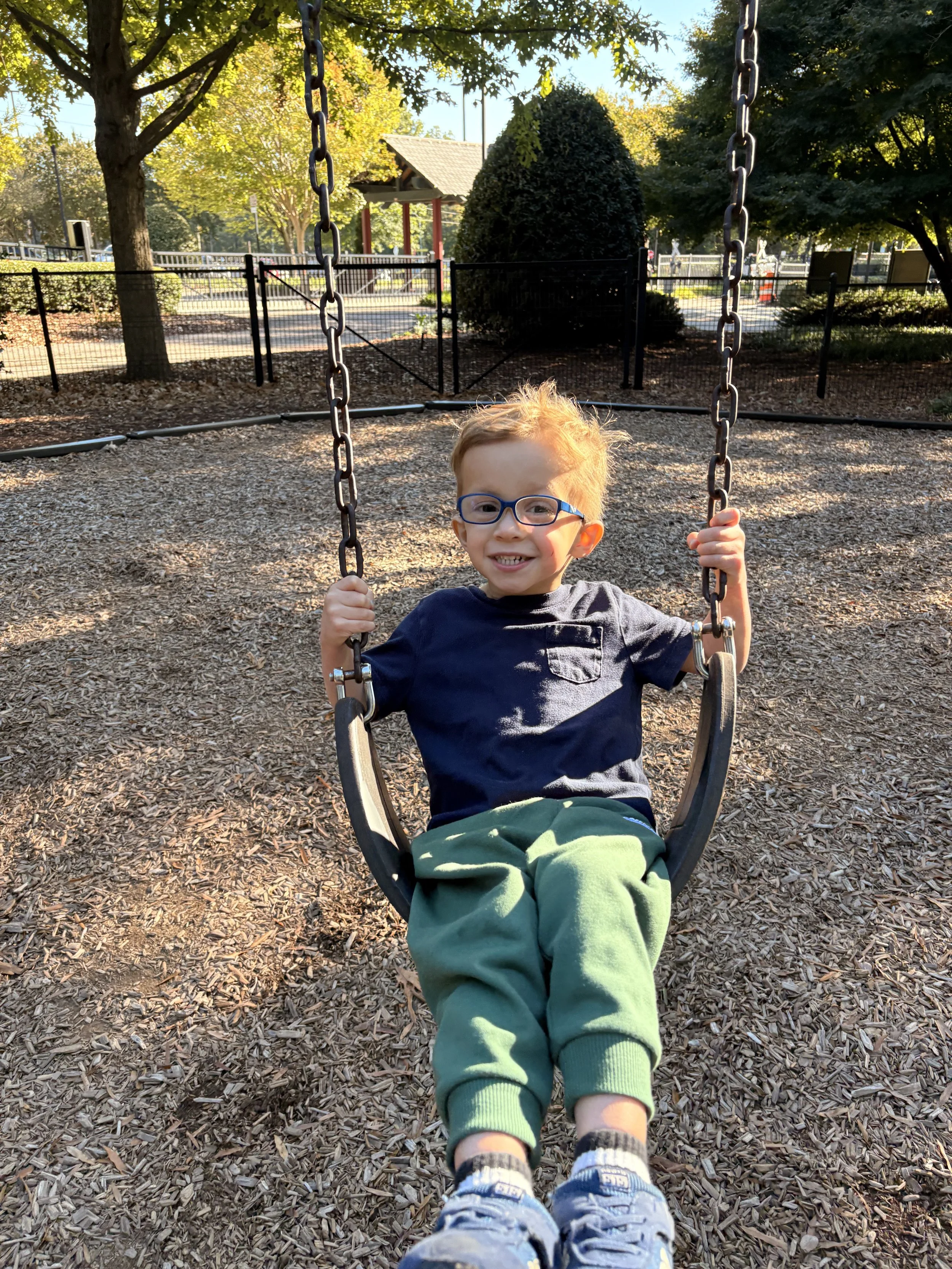
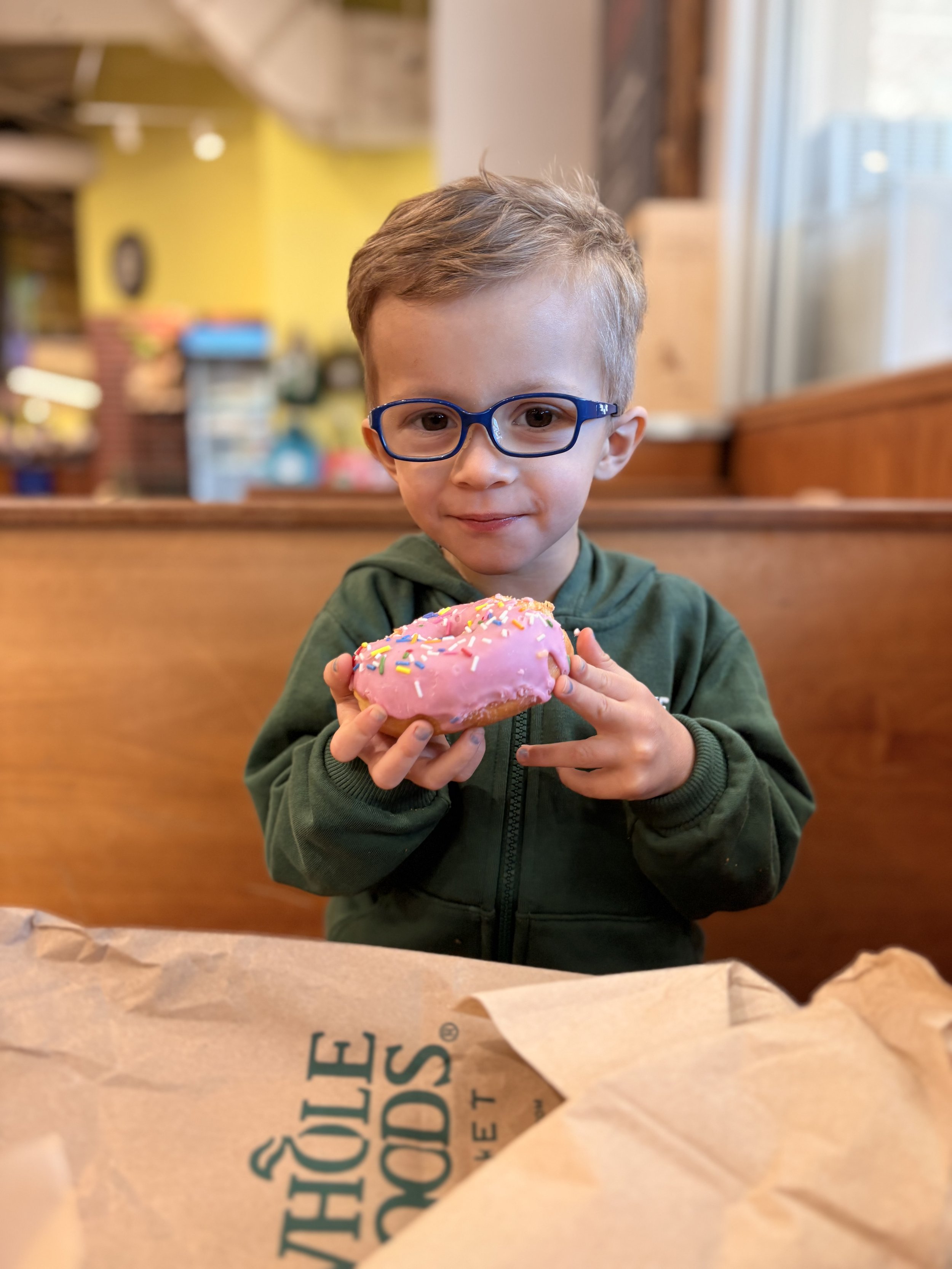
I wanted to give you all a current update. The good news is, Ollie is doing great and is feeling good. The bad news is, Ollie's donor has fallen through, so we're moving to our backup donor. The backup can't donate until late November or early December, which means Ollie will most likely be in the hospital over Christmas. Ollie has a biopsy on Tuesday, October 27th, and we're praying it shows he's in remission.
Earlier this week, our transplant nurse called to tell us that Ollie's donor could not be reached. This donor had been willing and available for months and was medically cleared to donate.
You may remember he got sick in mid-October and couldn’t donate at his scheduled appointment. At the time, the coordinator told us that if there was one more problem, we would have to move on and unfortunately that time has come.
I don't know why he can't donate, and I don't know anything about him. I do know this almost never happens. The last time a donor failed to donate at UNC was 11 years ago. It's disappointing, to say the least.
Last year, Ollie had one perfect 10/10 match and two 9/10 matches. We used the 10/10 donor for his first transplant.
We think one reason Ollie relapsed is that those cells were too similar to his own. A slightly imperfect match creates a stronger "graft vs. leukemia" effect, meaning the donor's cells attack any leukemia left behind. That's why we need a 9/10 donor this time.
Our backup 9/10 donor answered the call within 24 hours and is already scheduled for medical testing. But testing and scheduling take weeks. The earliest they can donate is late November or early December, and that's as long as our oncologist is willing to wait.
If Tuesday's biopsy shows Ollie is in remission, we'll move to transplant as quickly as possible so the leukemia doesn't have a chance to come back.
I know this is what has to happen to save his life. But all I can think about is that my sweet boy won't be home for Christmas.
Will is being tested to be Ollie's donor. A parent is a half match, also called a "haplo" donor. Doctors use a haplo donor only after 10/10 and 9/10 donors because it carries a higher risk of graft-vs-host disease, where the donor's cells cause inflammation in the patient's organs, and other complications.
Among family members, siblings tend to have the best results, followed by fathers and then mothers. We've decided not to have Maddie tested and will move forward with Will.
Can I get tested for Ollie?
So many of you offered last year, and we're so grateful. But the matching process takes too long for anyone who joins now to help Ollie. You could still save someone else's life.
How you can help:
Please pray for all of these details to come together. It's been an incredibly hard year, and it feels like every time we take a step forward, we take a few steps back.
If you're between 18 and 35, please consider joining the NMDP registry. About 75% of patients don't have a fully matched donor in their own family, so strangers on the registry are their best hope.
Register and swab. Sign up online and you'll get a free cheek-swab kit in the mail within 3–7 days.
If you match. You'll be contacted, learn about the process and risks, and have a physical and blood work. Donating is always voluntary, but a family will be counting on you.
Donate. The patient's doctor chooses the method:
Blood stem cells (about 90% of donations): This is non-surgical. Cells are collected from your arm through a machine. You'll get daily shots of a medication called filgrastim beforehand.
Bone marrow (about 10% of donations): This is an outpatient procedure under anesthesia. Marrow is drawn from the back of the hip bone.
It costs you nothing. NMDP covers medical and travel costs, missed pay, and even child and pet care.
Can't join? You can host a swab drive, donate money, or give blood and platelets.